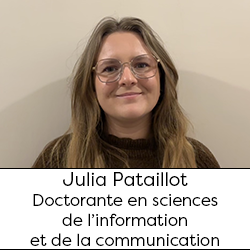
[Portrait] Julia Pataillot, doctoral student in information and communication sciences (Centre Norbert Elias)
What is your research about?
My thesis is about representations of psychiatry in film I'm interested in the multiplicity and diversity of psychiatric figures in a cross-disciplinary approach combining semiology, aesthetics and sociology. I seek to understand the place of fascination and stigmatisation around these subjects and what elements the cinema brings back to the collective imagination and therefore, by extension, understand the societal impact of these representations once outside the framework of fiction.
What are your current scientific activities?
I'm currently in the middle of writing my thesis, which I hope to defend in late 2027 or early 2028. I'll be at the Midisciences on 12 March to present my work. At the beginning of June, I'll be at the Université Sorbonne Paris Nord as part of the SFSIC (Société Française des Sciences de l'Information et de la Communication) doctoral conference, giving a talk on contemporary typologies of psychiatry in film.
Why did you choose to work in academic research?
Since the start of my studies, I've always been interested in research, but I didn't want to steer my career in that direction. It was while writing my two Master's dissertations that I discovered my interest in research, and continuing my studies with a doctoral thesis was an obvious choice. I'm passionate about cinema and wanted to analyse it and explore its social dimensions. Research is a free space where you can take the time to think. On the other hand, I've always had an attraction for teaching, and university research was the perfect compromise to combine the two.
What advice would you give to students who want to do research?
First, I'll tell them to work on a world that really touches them. Research is a long-term process, and it's essential to love your subject and be passionate about it. You also need to bear in mind that research is not a linear process, and moments of doubt are as much a part of the process as moments of satisfaction and success. So it's vital not to isolate yourself and to surround yourself with researchers and other people, so that you don't experience research as a period of isolation.
What object or image from your business best illustrates you?
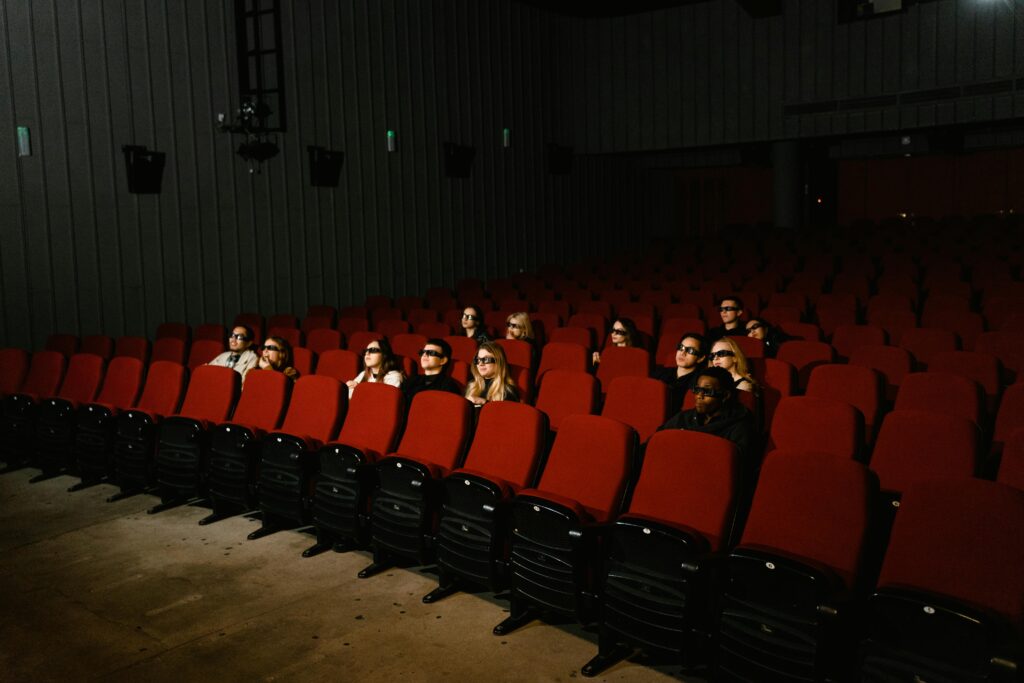
I chose this photo from an image bank: a cinema with spectators, to symbolise the way in which cinematographic representations shape and influence the collective imagination and perceptions.
Not to be missed
On 12 March 2026, Julia Pataillot will be hosting a Midiscience on the theme of «Cinema and psychiatry: how mental illness is portrayed in images».», on the Hannah Arendt campus, amphi 2E01, from 1pm to 2pm.

The Norbert Elias Centre (UMR 8562)
The Norbert Elias Centre (UMR 8562) brings together researchers from different disciplines who are convinced of the unity of the human and social sciences. The laboratory is located on the EHESS Marseille campus at Vieille Charité and on the Hannah Arendt campus at Avignon University. It brings together 50 researchers, 80 doctoral students and a support team of about ten people who work on the analysis and description of social worlds.
>> Read more
Research portraits
Updated on 5 March 2026